Lids Down, Stand Up: The Morning Huddle That Gave a Small Firm a Cleaner Start
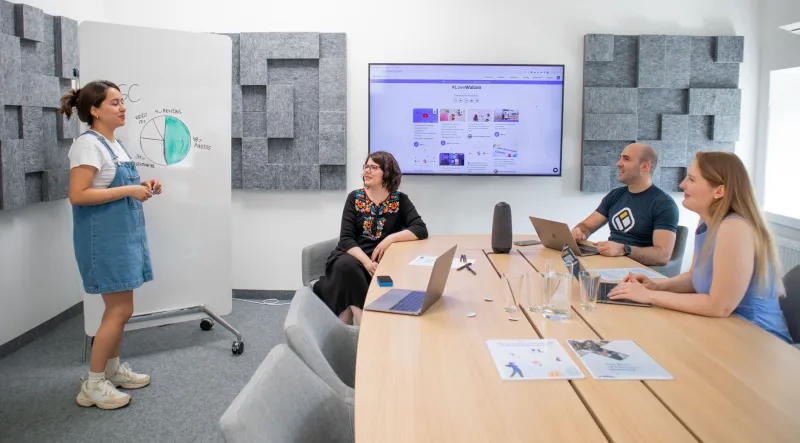
At 8:58 on a grey November morning in 2026, the kettle is doing its usual impression of a small engine. Someone is hunting for the good stapler. Two people are already answering emails they will regret before lunch. This is the moment most small firms call the start of the day: doors open, laptops up, everyone quietly disappears into their own screen.
For two weeks, a nine-person UK firm tried something different. The doors still opened at nine. The laptops did not. For the first twenty minutes, the team stood in the same room, talked through the day and triaged the work ahead. Then they sat down and started. Here is what happened, including the parts that did not work.
Why a standing start, and why not a pep talk
The aim was not motivation. There were no icebreakers and nobody was asked to share a fun fact. The idea was simpler: most small teams lose the first hour of the day to a slow, silent sorting process. People open their inboxes, remember three things at once, ask a colleague a question that could have been answered in a two-minute huddle, and then wonder why 10am arrived before any real work did.
The experiment was designed to move that sorting to the front of the day. Twenty minutes, standing, no screens. The standing part mattered because it kept the ritual short. The no-screens part mattered because it stopped the huddle from becoming a second inbox.
The structure we used
The format was deliberately plain. A whiteboard and a timer did most of the work.
- 9:00 to 9:03: Fixed points. One person read out the day's non-negotiables from a printed sheet or the board: deliveries, client calls, deadlines, cover gaps. No discussion. Just the facts.
- 9:03 to 9:12: One-minute round. Each person gave one must-do, one risk and one ask. No long explanations unless someone specifically asked a question. The chair kept the pace.
- 9:12 to 9:17: Triage. The team moved sticky notes into three columns: now, next and not today. Only genuine blockers got a named owner and a time. Everything else went to the park-it list for a proper conversation later.
- 9:17 to 9:20: Close. Everyone named their first task and their first quiet block. Then laptops came up.
It sounds formal written down. In practice it felt more like a shift handover than a meeting. The first day was awkward. The second day was faster. By the Friday of week one, the team was finishing in fifteen minutes without being told.
What changed by the end of week one
The most obvious difference was the noise. Not the noise of the huddle itself, but the noise that did not happen afterwards. The usual 9:40 flurry of small interruptions thinned out. People had already surfaced their asks in front of everyone, so they were less likely to go hunting for answers one desk at a time.
Decisions moved earlier, too. The team said no to three pieces of work before 9:30 on the Wednesday, simply because the triage board made the day look full. Nobody had to be a hero about it. The board did the awkward bit.
There were also small, unglamorous gains. Handovers were clearer. The person covering the phone knew what counted as urgent. The designer knew which feedback was needed before lunch and which could wait until Thursday. The morning felt less like a scramble and more like a route.
The quiet-start problem
Not everyone loved it. One team member described the first three days as being ambushed by conversation before they had properly woken up. Another said the huddle was fine, but the walk from the front door to the standing spot felt like being pulled into a school assembly.
That feedback mattered. A morning ritual that only works for the loudest people in the room is not a ritual. It is a takeover.
The team made two changes in week two. First, the huddle was capped at eight minutes. Second, it was followed by a protected twenty-minute silent landing: no meetings, no calls, headphones allowed, and no expectation to chat. The quiet start did not disappear. It moved to 9:08 and became something the team defended rather than something they lost.
The eight-minute version
If twenty minutes sounds unrealistic for your firm, the shorter version is probably the more useful experiment. It keeps the shape but removes the temptation to solve everything before the day begins.
- Stand in the same place at the same time. Do not wait for latecomers; start with whoever is there.
- Read the fixed points in sixty seconds. Keep it factual.
- Give each person thirty seconds for one must-do and one ask. No full updates.
- Park anything that needs a proper conversation. Write it on the board and move on.
- End with one sentence from each person: what they are doing first. Then protect fifteen to twenty minutes of quiet.
Use a timer. If the huddle overruns, cut the round short rather than cutting the close. The close is the bit that turns a chat into a plan.
Rules that keep it honest
A morning huddle can go wrong in predictable ways. It can become a management briefing. It can become a problem-solving session. It can become the place where the most confident person talks for eleven minutes while everyone else watches the clock.
A few rules help:
- No laptops and no phones. One chair, one timer, one board.
- Stand up. Comfortable chairs turn eight minutes into twenty-five.
- Do not solve problems in the huddle. Park them with a name and a time.
- End on time even if the list is unfinished.
- Rotate the chair weekly so it does not become one person's show.
- Ask quiet people for their one must-do and one ask, then move on. Do not force a performance.
The verdict
By the end of the second week, the firm kept the shorter version. The full twenty minutes was too long for a team that already knew a fair amount about each other's work. Eight minutes did the job. The standing was useful not because it made people faster, but because it stopped the morning from becoming a solo sport.
The quiet start survived, too, but only because it was protected on purpose. That is the lesson worth borrowing: opening the doors before opening the laptop does not have to mean filling the room with noise. It can mean sorting the day together, briefly, so that the quiet that follows has somewhere to go.
Twenty minutes sounds like a lot until you compare it with the thirty-minute tangle of pings and half-answers it replaces. Start with eight. Run it for two weeks. Ask the team whether they knew their first task before half nine, and whether they interrupted anyone before ten. Then decide what your mornings are actually for.